

 See My Latest Article on HelloNation
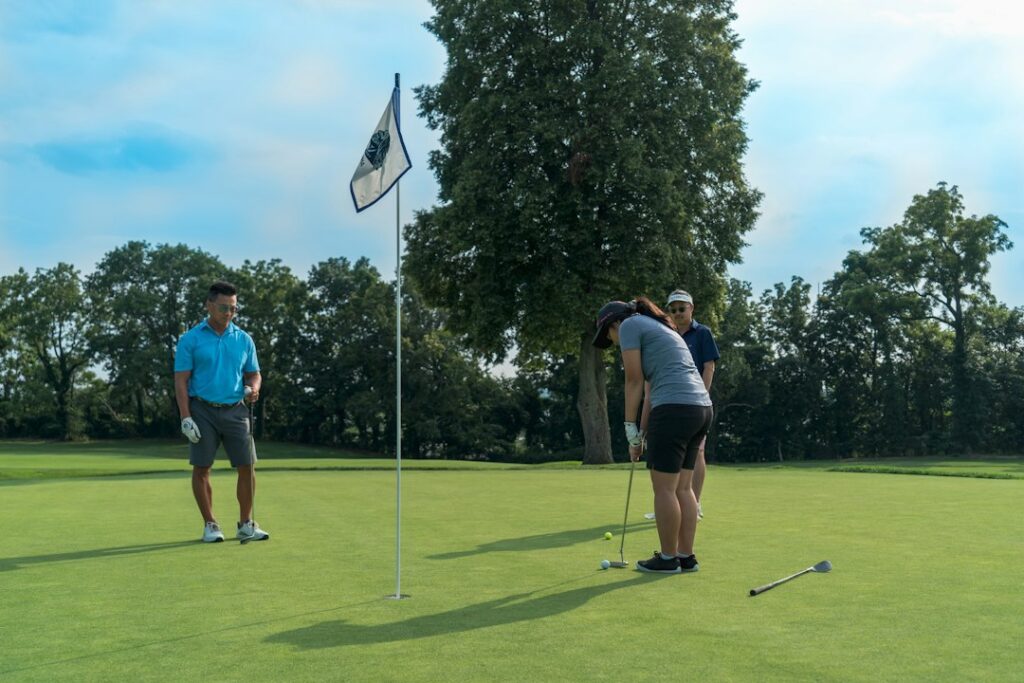
Group golf lessons can be an effective way to build fundamentals, gain confidence, and make practice more purposeful. The biggest benefit comes from treating the class as both instruction and a learning environment: listen for the main concept, observe how it applies to different golfers, and spend time testing the idea through guided practice.
What can golfers realistically learn in a group lesson?
A group lesson usually focuses on a small number of skills rather than trying to rebuild an entire swing. Most sessions cover fundamentals such as grip, posture, alignment, ball position, contact, distance control, or basic shot shape.
The instructor may introduce one shared concept, then adjust the explanation for each golfer. For example, everyone might work on consistent setup, but one participant may need help with alignment while another needs a more stable posture.
A useful group lesson should help participants understand:
- What the club is doing at impact
- How setup affects the starting direction of a shot
- Which errors are most common for the individual golfer
- What practice task can reinforce the lesson
- How to judge progress without expecting every shot to be perfect
Golfers should not expect every part of the lesson to apply equally to them. The goal is to identify the one or two pieces of information that are most relevant to the current stage of development.
How should a golfer prepare before arriving?
Preparation does not require a long practice session. Arriving with a clear question and a basic idea of current problems is more useful than hitting a large number of balls beforehand.
Before the lesson, consider:
- Which clubs feel easiest and hardest to use
- Whether misses usually go left, right, short, or long
- Whether poor shots happen more often from the tee, fairway, rough, or putting surface
- Whether contact problems appear during full swings or shorter shots
- What change has already been attempted
Wearing comfortable clothing and footwear also matters. Group instruction often includes standing, swinging, walking short distances, and repeating drills. In Mechanicsburg, seasonal weather can change quickly, so indoor simulator instruction may be especially useful during colder months, wet conditions, or periods when outdoor practice is inconvenient.
A golfer should also arrive early enough to settle in. Rushing into a lesson can make the first few swings unrepresentative because the body has not yet adjusted to the environment.
How can participants learn while someone else is being coached?
Observation is one of the most overlooked advantages of group instruction. Watching another golfer receive feedback can reveal solutions without requiring the same mistake to be repeated personally.
Pay attention to three things:
1. The visible problem: What is happening to the ball or club?
2. The suggested change: What adjustment is being made?
3. The result: Does the change improve contact, direction, trajectory, or consistency?
A golfer may recognize a familiar issue in another participant, such as poor alignment or excessive effort. Seeing the difference between a problem and a correction often makes technical information easier to understand.
However, observation should not turn into constant comparison. Golfers have different mobility, strength, experience, club specifications, and natural movement patterns. The same correction may produce different results for different people.
Should beginners and experienced golfers join the same class?
Mixed-experience groups can work well if the instruction is organized around shared fundamentals and individual adjustments. Beginners often benefit from seeing that more experienced golfers also make mistakes. Experienced participants may gain a clearer understanding of their own habits by explaining or observing basic concepts.
The main challenge is that beginners may need more time with terminology and setup, while experienced golfers may be ready for more detailed feedback. A well-structured class handles this by keeping the central theme simple and offering different practice tasks within the same session.
Golfers should choose a class that matches the general level described by the instructor. A complete beginner may become overwhelmed in a session built around advanced shot shaping. An experienced player may receive limited value from a class that spends the entire time introducing basic equipment or grip positions.
How should golfers use a simulator during group instruction?
A simulator can make group lessons more informative by showing ball-flight data and providing a consistent setting. Useful measurements may include clubhead speed, ball speed, launch angle, carry distance, spin, and starting direction.
The numbers are most helpful when they answer a specific question. For example:
- Is the ball starting left because of alignment or clubface direction?
- Is a higher launch producing more carry?
- Is a shorter swing improving contact?
- Is extra effort increasing distance or only creating inconsistency?
Data should support observation rather than replace it. A golfer does not need to track every measurement during a lesson. Too much information can distract from the movement or decision the instructor is trying to improve.
Simulator results also require context. Indoor distances may not match outdoor distances exactly, and the quality of the reading can depend on the equipment, lighting, ball type, club condition, and setup. The most useful comparison is often between repeated swings in the same session rather than between simulator numbers and course performance.

What should a golfer practice after the lesson?
A group lesson becomes much more valuable when the follow-up practice is narrow and repeatable. Trying to remember every comment from a session can create confusion.
Choose one primary focus, such as:
- Starting the ball toward a selected target
- Making centered contact with a shorter club
- Holding a balanced finish
- Controlling the length of a putting stroke
- Rehearsing a consistent pre-shot routine
Practice the movement slowly at first, then gradually add normal speed. A helpful session may include a few rehearsal swings, several short shots, and a small number of full swings. The purpose is to learn whether the new motion remains reliable as the swing becomes more natural.
Golfers should record a short note after practice: what was attempted, what improved, and what still felt uncertain. This makes the next group lesson more productive because the instructor can address an actual pattern rather than a vague impression.
What common mistakes reduce the value of group lessons?
The most common mistake is trying to make several major changes at once. A golfer may hear advice about posture, grip, tempo, alignment, and release, then attempt all five during the next swing. That usually makes it difficult to identify what helped.
Other problems include:
- Hitting too many balls without a specific purpose
- Focusing only on the longest shot
- Treating one poor swing as proof that a change failed
- Comparing personal progress with another participant
- Ignoring short-game and putting skills
- Forgetting the reason behind a drill
- Expecting an immediate change on the golf course
A group lesson is not a performance test. Temporary inconsistency is normal when a familiar movement is being changed. Progress is better measured by improved contact, clearer decision-making, and more predictable misses than by a single impressive shot.
How can local conditions affect practice in Mechanicsburg?
Seasonal conditions influence how often golfers can practice outdoors and what type of practice is realistic. Cold temperatures can reduce comfort and flexibility, while wet ground may limit practice areas. During these periods, indoor instruction or simulator work can help golfers maintain a routine and study ball flight without waiting for ideal conditions.
When outdoor practice is available, golfers should still account for wind, temperature, uneven lies, and changing turf conditions. A shot that performs well from a level indoor mat may behave differently from grass, a tight lie, or light rough. Group lessons are most useful when indoor learning is eventually connected to outdoor decision-making.
The practical goal is not to copy a perfect swing. It is to understand a manageable process: prepare consistently, focus on one useful change, observe the ball flight, and practice enough to make the change familiar.