

 See My Latest Article on HelloNation
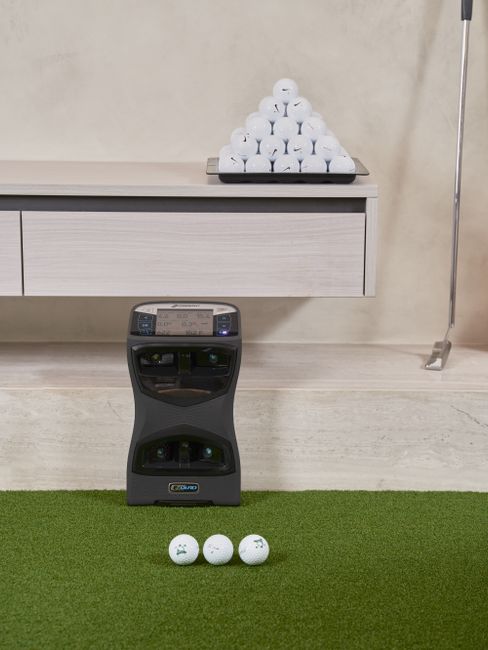
Launch monitor data can make practice more useful by showing what the golf ball and club are actually doing. Instead of judging every swing by feel alone, golfers can connect technique with measurable results such as ball speed, launch angle, carry distance, spin, club path, and face angle.
For local golfers, this can be especially helpful during periods when outdoor practice is limited by cold temperatures, wet ground, shorter daylight, or changing course conditions. A simulator or indoor hitting space provides a controlled setting where progress can be tracked over time rather than guessed from one good or bad shot.
What does a launch monitor measure?
A launch monitor measures parts of the club’s movement and the ball’s flight. Some systems use cameras, radar, or a combination of both. The exact features vary, but most useful systems report several core numbers:
- Club speed: How fast the club is moving before impact.
- Ball speed: How quickly the ball leaves the clubface.
- Smash factor: The relationship between ball speed and club speed, which helps show how efficiently the ball was struck.
- Launch angle: The direction the ball begins traveling vertically.
- Spin rate: How quickly the ball rotates after impact.
- Carry distance: How far the ball travels through the air before landing.
- Club path: The direction the clubhead is moving through impact.
- Face angle: The direction the clubface is pointing at impact.
- Face-to-path relationship: How the clubface is positioned compared with the swing path, often a major influence on curvature.
These numbers do not automatically explain why a shot happened. They provide clues. The golfer still needs to connect the data with ball flight, contact location, setup, and swing feel.
How can data improve practice?
The main benefit is feedback. A golfer can hit a series of shots, identify a pattern, make one adjustment, and see whether the result changes.
For example, a player who believes a driver problem comes from swinging too slowly may discover that club speed is acceptable but the clubface is consistently open. That points practice toward face control rather than simply trying to swing harder.
A player working on irons may notice that carry distance changes widely even when the swing feels similar. The monitor may reveal inconsistent strike quality, excessive spin, or a launch angle that is too low. That information helps narrow the problem.
Good practice usually follows this sequence:
1. Establish a baseline with several normal swings.
2. Identify one measurable pattern.
3. Choose one swing or setup change.
4. Hit enough shots to see whether the pattern changes.
5. Test the adjustment with a target and routine similar to actual play.
This approach is more productive than making several changes at once.
Which numbers matter most for beginners?
Beginners do not need to track every available statistic. Three or four measurements are usually enough at first.
Carry distance is useful because it helps golfers choose more realistic clubs for different shots. Total distance can be misleading because it changes with landing conditions, while carry is easier to compare indoors and outdoors.
Face angle helps explain starting direction. For many golfers, the clubface has more influence on where the ball initially starts than the swing path does.
Club path helps explain curvature when considered alongside face angle. A path moving left or right is not automatically a flaw; its effect depends on how the face is positioned relative to that path.
Strike quality is often more valuable than raw speed. A centered strike generally transfers energy more efficiently and produces more predictable distance. Some monitors display impact location directly, while others require golfers to use face spray or impact tape carefully.
The most useful number is the one that answers a current practice question.
How should launch monitor data be used with irons?
Iron practice should focus on predictable carry gaps and consistent contact. A golfer can begin by hitting a small group of shots with one club and recording the normal carry distance rather than the single longest result.
If a seven-iron produces carries ranging from 125 to 155 yards, the issue may be inconsistent contact or delivery rather than a lack of strength. A tighter distance pattern is often more helpful on the course than an occasional high number.
Track:
- Average carry distance
- Carry distance variation
- Launch angle
- Spin rate
- Start direction
- Strike location, if available
A useful drill is to choose a target and hit shots in groups of five or ten. The goal is not to maximize distance. The goal is to produce a repeatable launch and carry window.
What can driver data reveal?
Driver practice can separate speed problems from launch and contact problems. A golfer may gain distance without swinging faster by improving centered contact, launch conditions, or face control.
Important driver measurements include ball speed, launch angle, spin rate, carry distance, and side-to-side dispersion. Dispersion describes how widely shots finish from one another. A small loss of distance may be acceptable if it produces a much tighter pattern.
A common misconception is that the longest drive is the best result. A drive that carries farther but curves sharply may be less useful than one that travels slightly shorter and remains playable.
Practice should include both performance and control:
- A few swings focused on solid contact
- A few swings at normal playing speed
- Several shots aimed at a specific fairway-sized target
- A review of the typical pattern, not just the best shot
This helps prevent launch monitor sessions from becoming speed contests.
Does simulator data reflect outdoor golf perfectly?
No. Indoor data is valuable, but it should be interpreted with context. A simulator may estimate how far a shot would travel outdoors, yet real performance is also affected by wind, temperature, elevation, turf firmness, lie, grass type, and the golfer’s ability to see the target.
Cold weather can reduce ball performance and change how the body moves. Wet or soft ground can reduce rollout. A golfer practicing in a controlled indoor environment should therefore treat carry numbers as a reference rather than a permanent guarantee.
The most dependable use of a simulator is comparing shots under similar conditions. If the same club is tested with the same ball and a consistent routine, changes in launch, contact, and dispersion can still reveal meaningful progress.
How often should data be reviewed?
Data should be reviewed often enough to identify trends but not so frequently that every swing becomes a judgment. A short record after each practice session can include:
- The main goal
- The club or clubs used
- Average carry distance
- Typical shot shape
- Common miss
- One adjustment tested
- What should be practiced next
Looking at averages and patterns is more reliable than reacting to one unusually good or poor shot. A small sample can be distorted by fatigue, changing swing intent, or a mishit.
For golfers in Mechanicsburg, seasonal practice records can also be useful. Comparing indoor sessions during colder months with outdoor results later in the year may show which improvements transfer to real playing conditions and which need further testing.
What are common mistakes with launch monitor practice?
The most common mistake is chasing numbers without a clear purpose. A golfer may try to increase club speed, lower spin, or change swing path even when those measurements are not causing the current problem.
Other mistakes include:
- Treating estimated total distance as exact
- Using only the longest shot to choose club distances
- Changing several swing details at the same time
- Ignoring strike location
- Hitting too many balls after fatigue changes the swing
- Practicing without a target or pre-shot routine
- Assuming a technically unusual number is automatically bad
Launch monitor data works best as a guide for decisions. It cannot replace balance, contact awareness, target selection, or the ability to play from uneven lies and changing weather.
The strongest practice sessions combine measurable feedback with realistic intent: select a target, make a normal swing, observe the result, and use the pattern to decide what to repeat or change.