

 See My Latest Article on HelloNation
Why Practice Putting Indoors?
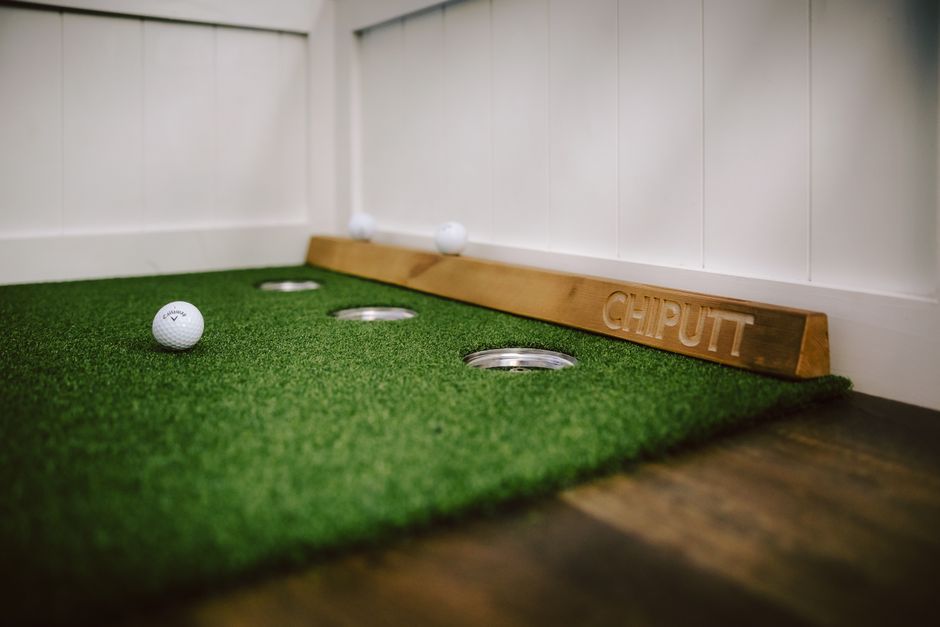
Indoor putting practice offers local golfers a way to keep skills sharp during cold, rainy, or winter months in Mechanicsburg, PA. Not every home has room for a full simulator, but putting mats or small carpeted spaces can become a practical indoor putting area. Regular practice indoors focuses on the short game, which often makes the greatest difference on local courses once the outdoor season returns.
What Creative Games Can Make Indoor Putting More Enjoyable?
Games turn repetitive drills into engaging challenges. Even simple household items can introduce variety and challenge, keeping practice interesting and productive. Here are a few trusted ideas:
Coin Toss Target
- Set up coins or small flat objects at various distances or angles on your putting mat or carpet.
- Try to putt balls so they come to rest touching or very close to the coin.
- Adjust coin location, add more coins, or require players to "clear" a coin before moving to the next.
- This game sharpens accuracy and speed control—valuable on the region’s variable speed greens.
Around the Clock
- Place several targets (like paper cups, sticky notes, or plastic lids) in a circle around a hole or target spot.
- Start from one "hour" position; after sinking a putt, move clockwise to the next position.
- The goal is to complete the full circle with as few misses as possible.
- This routine helps local players adapt to different angles and putting breaks.
Obstacle Challenge
- Set up gentle obstacles using books, tubes, or toys—anything that safely blocks a straight path to the target.
- Challenge yourself to "curve" putts or bank them around the obstacles.
- Change the layout or add new obstacles as skills improve.
- This encourages creativity and adaptability, reflecting the unpredictable bounces and slopes of local greens, especially during transitional seasons.
Distance Control with Household Items
- Lay out towels, strips of masking tape, or lengths of string at varying distances as stopping zones.
- The challenge: stop your ball within the boundaries of each zone.
- Assign points for balls that finish inside or closest to each zone, and keep score over several rounds.
- Practicing distance control improves both lag putting and must-make short putts under pressure.
How Can Parents and Kids Practice Together Indoors?
Putting games can be easily adapted for all ages and skill levels, making indoor sessions a family-friendly way to pass time in Mechanicsburg.
- Use color-coded targets, playful household objects, or even favorite toys as targets.
- Allow younger children to putt from closer distances, or set "handicap" rules for adults.
- Try relay games, where each team member must make a putt before the next goes, for group excitement.
- Friendly competition encourages consistency, focus, and patience for golfers of any age.
Do Indoor Games Improve On-Course Performance?
Game-based indoor routines help reinforce good putting technique, build confidence, and highlight areas needing attention—even in small spaces. The variety of target drills, shapes, and obstacles transfers to real-world course situations, especially on the variable turf of central Pennsylvania. While indoor mats can’t fully mimic outdoor green speeds or slopes, focused indoor practice often leads to faster on-course improvement because it encourages problem-solving and repetition in a comfortable environment.
What if Space Is Limited or Floors Are Uneven?
Not every home in Mechanicsburg has the same layout or square footage. Adaptation is key:
- Short putts (2-6 feet) can be practiced in hallways, offices, or bedrooms with minimal space.
- Use a coaster, cup, or coin as a target; even the rubber bases of chairs make good goals.
- If floors are uneven, take advantage of the break to practice reading and adjusting for slopes.
- In rented homes or apartments, ensure no damage is done to floors; use putting mats, rugs, or protective layers.
- Set routines that fit the available space—consistency is more important than distance.
Are There Common Misconceptions About Indoor Putting Practice?
Some residents may think indoor drills are too basic to be valuable. In reality, many professional golfers use similar games to maintain touch and accuracy, especially during the off-season. Another misconception is that a lack of official equipment (like a simulator or expensive mat) reduces training effectiveness; in truth, household solutions can be just as effective for putting skills. Regular indoor putting keeps eye, hand, and green-reading skills sharp for Mechanicsburg’s seasonal return to outdoor golf.