

 See My Latest Article on HelloNation
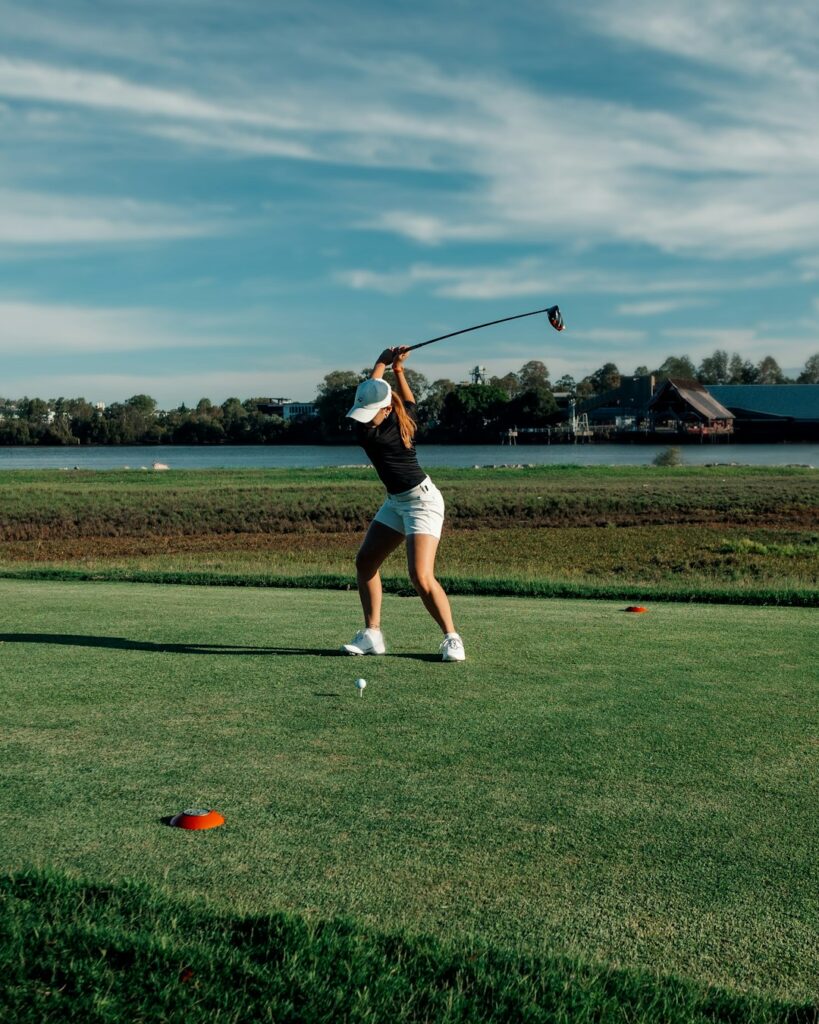
What Is the Difference Between Carry and Total Distance?
Carry distance is the length a golf ball travels through the air before first touching the ground. Total distance is how far the ball moves from the tee to its final resting spot, including any additional roll or bounce after landing.
Local golfers often hear both terms in lessons or while using simulators, but confusing them can affect equipment choices and expectations. For golfers practicing indoors in Mechanicsburg, understanding this distinction is especially useful because simulated turf and winter weather may reduce or eliminate roll, highlighting only carry.
Why Should Mechanicsburg Golfers Care About Both Distances?
While both distances matter for game improvement, each answers a different question. Carry distance shows how far a shot will fly, helping you judge what’s needed to clear an obstacle or a hazard. Total distance matters for club selection on wide-open holes where roll could add significant yards.
- Indoor golf simulators in Mechanicsburg are typically set to soft or average turf, which can understate roll compared to local outdoor ranges with firmer conditions.
- Wet or soggy conditions after a rainstorm often found in the area, especially in early spring or after the occasional summer downpour, will greatly limit rollout, making carry the more relevant number.
- On dry, tightly mowed fairways, such as those found during July or August in the region, total distance can increase as balls bound farther.
What Factors Influence Carry Distance?
Carry is primarily determined by swing speed, launch angle, and ball spin—but it is also shaped by local playing conditions.
- Air temperature: Colder air, common during early mornings or late fall rounds in Mechanicsburg, is denser and reduces carry.
- Humidity and altitude: Our region’s moderate humidity and low elevation mean those factors have only a minor effect versus places at high altitude or low moisture.
- Wind: Prevailing breezes can shorten or lengthen carry, especially on exposed holes around the city’s rolling outskirts.
- Club head technology and ball type: Higher-lofted clubs with high-spin balls will typically launch higher and increase carry, but each player’s results vary.
When Does Total Distance Matter Most Locally?
Total distance becomes particularly important on long, open fairways where rollout can make a difference, especially during drier parts of the year.
- During summer droughts, the ground in some Mechanicsburg neighborhoods and public courses dries out, causing the ball to bounce and roll farther.
- In early spring, soft greens and fairways absorb landing shots, reducing roll and making carry almost the only distance relevant for decision-making.
- Local golfers should remember that most simulators use settings for standard turf firmness; these do not account for local extremes in ground softness or dryness.
Common Misconceptions: Is Carry or Total More Important?
A surprising number of local players focus only on total distance, thinking it’s the key to longer drives. However, shots that just barely clear a pond or bunker need reliable carry, especially in areas with soft ground where the ball may stop quickly. Conversely, on hard summer turf, focusing only on carry can mean underestimating a potential overshoot if total roll-out isn’t considered.
- On approach shots to elevated greens common throughout the region, carry is often the only relevant metric—a ball that lands short may not bounce forward.
- Learning your average carry with each club, particularly in the city’s varied seasonal conditions, tends to result in more consistent decision-making.

How Can Mechanicsburg Golfers Accurately Measure Carry and Total?
Golf simulators are increasingly popular within the community for off-season training or analysis. Most provide both carry and total distance data for each shot, but context matters:
- Simulators often simulate roll using “average” turf speed, which may not reflect the soft, lush grass during a Mechanicsburg spring.
- Outdoors, use visible markers (flags, cones, or yardage markers) to measure actual carry, especially if tracking via GPS or a launch monitor.
- Consider logging both distances for several clubs during each practice session, adjusting expectations based on current weather and ground conditions.
Practical Example: Navigating a Local Fairway
Imagine a par-4 with a creek 180 yards from the tee and a wide, open landing zone beyond. If your average carry distance with a fairway wood is 185 yards, you’ll clear the creek on most attempts—even more so if temperatures are mild in late spring. However, if the ground past the creek is dry and firm, your total distance may be closer to 210 yards, potentially leaving a much shorter approach than expected.
Conversely, hitting in late fall or after heavy rain, your ball may carry the creek but roll just a few extra yards, stopping well short of mid-summer totals. Planning each shot using reliable carry and an adjusted expectation for total can prevent lost balls and improve your score.
Key Takeaways for Local Residents
- Carry distance is the most dependable metric for clearing hazards or planning shots where rollout is uncertain.
- Expect more total distance during drier, hotter spells, and nearly zero rollout after heavy rain or on soft turf.
- Use golf simulators and outdoor practice sessions to build an understanding of both metrics under local conditions.
- Avoid comparing late-season carry numbers to mid-summer total distances, as changing local weather and course management practices directly influence both.